University of Adelaide 2025
 I’ve always been curious about how healthcare is delivered in other parts of the world outside Australia, especially in places where resources are limited and where doctors often need to rely more on clinical skills than investigations. Nepal stood out to me for its rich, vibrant culture and the opportunity to learn from a system that operates with great resilience despite the challenges. I hoped the experience would give me a fresh perspective on patient care, and it absolutely did.
My first impression of the placement hospital was how starkly different it was from what I’m used to in Australia. The facilities were much more basic, and many of the resources we often take for granted back home simply weren’t available. Despite these limitations, I was struck by how resourceful and efficient the doctors and nurses were. They made the most of what they had and maintained a strong focus on clinical judgement and physical examination.
The hospital was incredibly busy, with a significantly higher patient load and population demand. I was amazed by the pace at which the doctors worked. Consultations were rapid, and decision-making had to be both fast and precise. It was clear that they were used to managing high volumes with limited time and tools, and I gained a lot of respect for their adaptability and resilience.
Thanks to Work the World, I was fortunate to gain exposure across a variety of clinical settings. During my time in cardiothoracics, I had the opportunity to scrub in and observe complex procedures such as valve replacements, congenital heart defect repairs and coronary artery bypass grafts.
 In the emergency department, I took on a more hands-on role, performing procedures such as arterial blood gas draws and assisting with resuscitation. These experiences helped me build confidence in my practical skills and adapt to working in a high-pressure environment.
Some of the most unforgettable moments from my placement came from the operating theatre. I had the rare opportunity to observe a tetralogy of Fallot (TOF) repair — watching a complex congenital heart defect being corrected in real time was both humbling and awe-inspiring. In the emergency department, every day brought something new.
I witnessed the management of a high-impact pelvic fracture from a road traffic accident, several cases of poisoning, and a child with suspected meningitis. One particularly striking case was a young patient presenting with liver failure secondary to Budd-Chiari syndrome — something I’d never seen before, and a condition I may never see again in Australia.
One of the most striking differences between Nepal's local healthcare system and Australia's was the availability of resources. In the ED, many investigations and treatments we consider routine in Australia were either delayed or unavailable. As a result, doctors relied heavily on their clinical acumen, history-taking, and examination skills, something I found quite Impressive. Another key difference was the patient load.
The ED was often overcrowded, and doctors were expected to manage far more patients in far less time. There was a clear sense of working within limitations while still striving to provide the best possible care.
 Cost also played a much more visible role in clinical decision-making. Patients often had to consider their ability to pay before undergoing tests or procedures, which added another layer of complexity.
Culturally, one of the most noticeable differences was the strong involvement of family members in patient care, often several relatives would accompany the patient and remain closely involved throughout their hospital stay.
I also observed a more traditional, paternalistic model of care, in which doctors were seen as trusted authorities, and patients tended to follow their recommendations without question. While this contrasted with the more collaborative, patient-centred approach I’m used to in Australia, it offered valuable insight into how cultural values shape healthcare interactions and expectations.
 Evenings and weekends were always packed with things to do — we were never bored. After placement, we’d head out to explore local bars and restaurants or visit temples and other cultural landmarks. We also spent plenty of time shopping in Thamel, which was always lively and beautiful, especially at night.
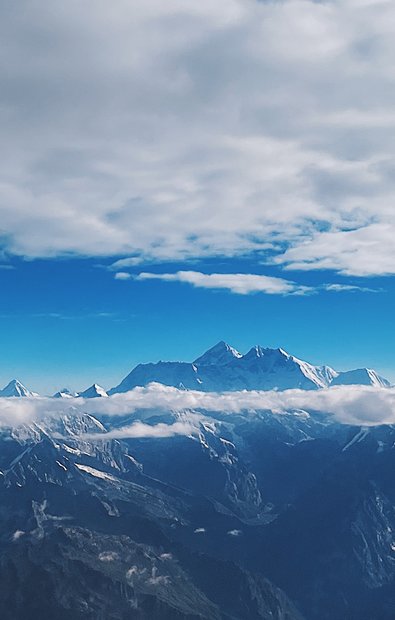
A definite highlight was our weekend trip to Pokhara, where we went trekking and enjoyed some great views of the Himalayas. It was a great way to balance the clinical experience with adventure and culture, and spending time with other students in the house made it all the more memorable.
Doing my placement overseas has been one of the most valuable experiences of my medical training. I saw a very different way of practising medicine, and experiencing this firsthand has given me valuable insights that will undoubtedly make me a more capable and adaptable doctor in the future.
Nepal challenged me to step out of my comfort zone and appreciate how culture shapes healthcare. It taught me a lot about resilience, empathy, and the importance of understanding patients beyond just their symptoms.
Overall, this placement didn’t just teach me medicine — it gave me a broader perspective on what it means to care for people.
 If you’re considering a Work the World placement, I can honestly say it’s one of the best decisions you’ll make as a student. You’ll be exposed to a completely different way of practising medicine, gain confidence in your clinical skills, and come away with a far deeper understanding of healthcare beyond your own system.
What really makes the experience special, though, is the amazing team based at the Work the World house in Kathmandu. From day one, they go above and beyond to make you feel welcome, supported, and at home. By the end of the placement, they feel less like staff and more like family.
They were such a big part of what made this experience genuinely unforgettable.
Start Your Journey
Want to go on your own once-in-a-lifetime adventure? Get started below:
Want to go on your own once-in-a-lifetime adventure? Get started below: